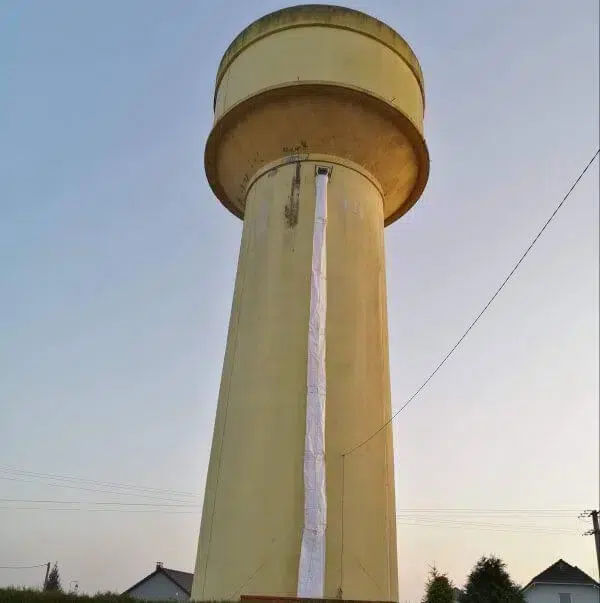
A scaffold chute is the practical route that carries demolition material from a working level down to a suitable container. On a scaffolded elevation, it keeps the drop path defined rather than relying on repeated carrying, loose throwing or improvised routes around access areas. The term may also appear as a scaffolding chute, a scaffolding shoot or a scaffold rubbish chute; the need is the same: a controlled route for the material leaving the work area.
Stortslurf® uses a flexible Ø50 cm section for the everyday rubble, stone, roof-tile and demolition work covered by the standard product. Each section is three metres long, so the set-up can be planned around the working height rather than around a fixed rigid length. The flexible construction is lightweight, folds away for transport and is designed for one-person assembly in around 10 minutes. It is a straightforward option when the job needs a clear chute route without handling heavy rigid sections.
For product dimensions, material suitability and the current £27.30 excl. VAT price, see the flexible scaffold chute product page. UK orders are delivered within 2 working days.
On a British building site, scaffold shoot and scaffold chute are two spellings for the same practical job: creating a controlled route from the working level to a suitable collection point below. Some contractors use scaffolding shoot when describing the complete drop from a scaffold, while others use scaffolding chute when choosing the sections and fitting method. The product and the material route remain the same.
If a specification asks for a scaffold shoot, it is still important to plan the actual working height, attachment point, connections and collection area. The same applies when a site team calls the route a scaffolding shoot. The flexible Ø50 cm system covers the established everyday rubble, stone, roof-tile and demolition use described on this page, with the number of sections chosen around the route rather than the spelling used in the brief.
Where more than one elevation is active, plans may refer to scaffolding shoots in the plural because more than one controlled route is needed. When a job refers to several scaffolding shoots, each route still needs its own secure attachment and suitable collection point. In everyday conversation, a scaffold shoot is simply another name for the same controlled chute route; the relevant product dimensions, joining method and stated tested height do not change.
Plan the route first
FITTING A SCAFFOLDING CHUTE TO YOUR SCAFFOLD
Fit the route around the way the work is being carried out, the collection point below and the site’s own working-at-height arrangements. The product supplies a flexible material route; safe access, the right attachment method and the suitability of the scaffold remain site-specific decisions.
Start at the intended working level and identify a stable attachment point that is appropriate to the scaffold arrangement. The chute’s integrated loops are the connection points. The established connection materials for the system are carabiner hooks, sturdy rope and heavy-duty cable ties. Where a scaffold tube is the selected attachment point, make sure the entire arrangement is planned and approved under the relevant site procedure before work starts.
Continue the route towards the container beneath the scaffold. Keep the path clear, avoid sharp bends and check that there is no interference with access routes, windows, platforms or other working areas. The lower end should direct material only into a suitable collection point. A scaffolding chute works best when the drop remains clear from the work position to the container rather than being forced around obstructions.
Before use, check the connection points and the path of the chute. If conditions on the scaffold, working level or collection area change, stop and reassess the arrangement. This page cannot replace a site-specific risk assessment, a competent-person check or the scaffold rules that apply to the job.
Build the height you need
SCAFFOLD CHUTE HEIGHTS AND CONNECTING SECTIONS
Flexible sections make it possible to plan a chute route around the height of the working level. Use the system within its established product limits and allow for the overlap created when one section is joined to the next.
One standard Stortslurf® section measures three metres. This is approximately one storey on many projects, but the right number of sections must always be chosen for the actual route and working position. When a longer drop is needed, join sections one after another using the integrated loops and the connection material supplied with multiple sections. The arrangement can then follow the building height from the scaffold level down to the collection point.
The product has been tested to a height of up to 27 metres using nine three-metre sections. This is the stated tested limit; it is not a reason to assume suitability beyond it. When connecting the sections, they slide into one another, creating approximately 30 cm of overlap per connection. That overlap should be factored into the total practical length rather than counting every section as a completely separate three-metre drop.
The loops give flexibility in how sections are linked, but each connection must be secure and stable. Check the full length before material is introduced, especially after a working position changes. For a lower task, the system can be shortened rather than leaving unnecessary length below the working level. For further practical answers, visit the Stortslurf FAQ.
3 metres
The length of each flexible Ø50 cm section.
Up to 27 metres tested
The stated tested height using nine three-metre sections.
Approx. 30 cm overlap
Allow for the overlap created at each joined section.
Choose the right route
SCAFFOLD CHUTE VS TRADITIONAL RIGID CHUTES
Both a flexible chute and a conventional rigid chute are intended to create a defined downward route. The practical difference is how the sections are handled, transported and assembled on a job where access, storage space and time all matter.
Consideration
Flexible Stortslurf® chute
Traditional rigid sections
Handling before installation
Flexible, lightweight sections that fold away for transport.
Rigid sections need to be carried and handled as fixed components.
Set-up approach
Designed for one-person assembly in around 10 minutes, with sections connected as the route requires.
Set-up depends on the rigid system, its fittings and the number of components.
Length planning
Three-metre sections can be joined, with approximately 30 cm overlap at each connection.
Length is determined by the rigid sections and their dedicated joining arrangement.
After the job
Folds into a compact format for removal from the site.
Rigid sections remain fixed-shape components to move and store.
Buying direct
£27.30 excl. VAT per standard three-metre section, with delivery within 2 working days.
Supplier pricing, hire conditions and transport arrangements vary by provider.
There is no universal winner for every site. Large specialist projects can have their own equipment rules and may require a particular system. For the standard Ø50 cm material types and the established maximum tested height, a flexible scaffold chute keeps the product choice simple: select the number of sections for the route, connect them securely and keep the drop path defined. The important point is not the label on the chute, but whether its documented size, connection method and tested limits suit the work.
If you are comparing a flexible system with temporary equipment, read the scaffold chute hire guide for published UK weekly hire examples.
Keep the route controlled
Safety and Site Requirements
A scaffold chute should support an organised material route, not become a substitute for site planning. Make the attachment, the chute path and the collection point part of the work plan. Check the route before use and after any change in the scaffold, working level or surrounding access area.
Secure the chute through its integrated loops using suitable established connection material.
Keep the chute as vertical as practicable and free from kinks, especially with heavy or sharp rubble.
Direct all material into a suitable container or collection point below the working area.
Keep the chute route away from access paths and follow the site’s own scaffold and working-at-height procedures.
Use the flexible system within its stated tested height of up to 27 metres.
The flexible chute helps reduce dust and noise; it does not remove the need for site controls appropriate to the work.
See the set-up
SEE THE SCAFFOLDING CHUTE IN ACTION
Watch the established Stortslurf® instruction video before planning your first chute route. The video is click-to-load: it does not connect to YouTube until you choose to play it.
Practical answers
FREQUENTLY ASKED QUESTIONS
Find answers to common questions about the flexible scaffold chute, scaffolding chute fitting, section length and site use.
A scaffold chute is a controlled route for moving rubble and renovation material from a working level into a suitable container below. The Stortslurf® flexible system uses Ø50 cm sections that are three metres long and can be connected for a longer drop.
Plan the attachment before work begins. The chute has integrated connection loops and the established fitting materials are carabiner hooks, sturdy rope or heavy-duty cable ties. Select a stable, suitable attachment point for the site and secure the route in line with the site’s own safety arrangements.
Each section is three metres long. The flexible rubble chute has been tested to 27 metres, using nine three-metre sections. When sections are joined, allow approximately 30 cm of overlap at each connection as specified for the system.
The standard Ø50 cm flexible rubble chute is intended for construction waste, stones, roof tiles and other demolition rubble. Keep the chute properly secured and free from kinks, and direct material into a suitable collection point below.
The flexible chute is designed to be lightweight and can be assembled by one person in around 10 minutes. On a scaffolded site, the full work set-up and attachment should always follow the site’s own working-at-height procedures.
For the clearest route for material, position the chute as vertically as practicable and make sure it is properly secured. This is especially important with heavy or sharp demolition debris, which should not be allowed to create kinks or uncontrolled movement in the route.
PLAN YOUR SCAFFOLD CHUTE ROUTE
Choose the number of flexible Ø50 cm sections for the working height, then order direct for delivery within 2 working days.
Before ordering, measure the route from the planned working level to the collection point and allow for every connection. A three-metre section with approximately 30 cm overlap does not create a full separate three-metre drop at every join. Choose the quantity in the shop, then plan the complete arrangement around the project’s working-at-height procedure and the actual site access conditions.
 United Kingdom
 Netherlands & Belgium
 Germany
 Austria
 France
 Spain
Spain Poland
 Italy
Italy Sweden